Treated wood is wood that has been appropriately treated with preservative chemicals with the intent of prolonging its intended usefulness lifecycle compared to untreated wood.
The active ingredients commonly used in treated wood are alkaline copper quaternary (ACQ), copper azole (CA) or micronized copper azole (MCA). These compounds react with the wood fibers to slow natural decay and have properties to resist termites, fungus, moisture and other elements that promote rot and cause structural degradation.
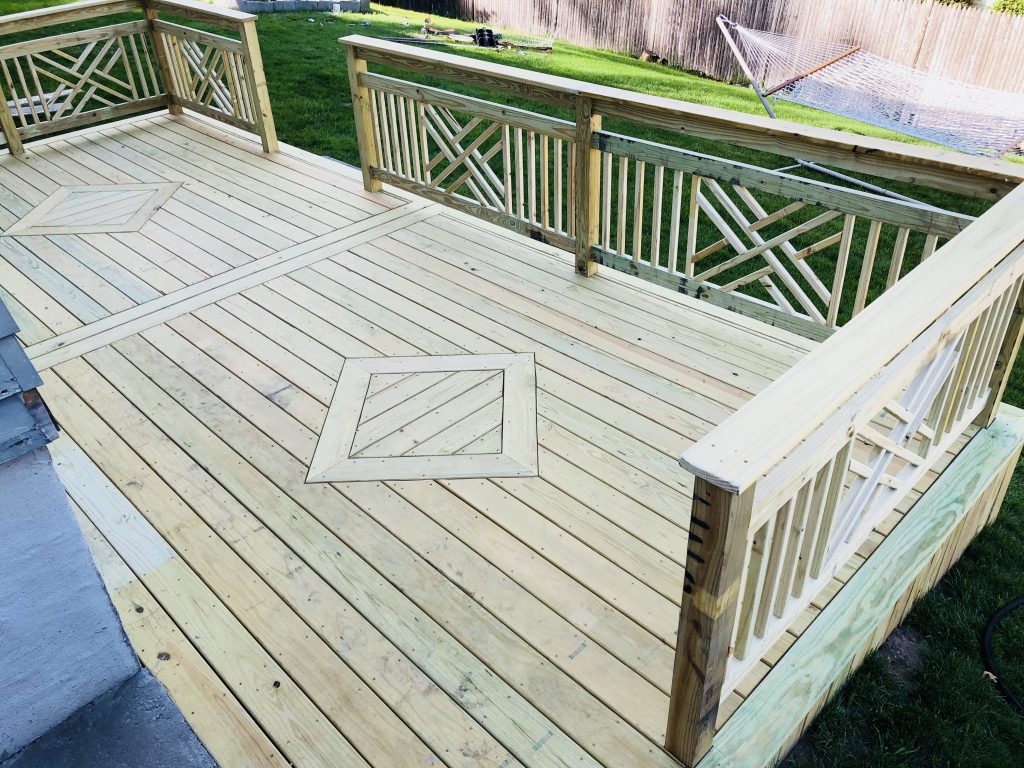
Advantages of Treated Wood
Life Cycle Comparison of untreated wood vs. treated wood
Because treated wood is intended to extend the usefulness and life of wood, fewer trees are required to perform the same function that is required when untreated wood is used.
Wood that has been appropriately treated can significantly reduce the number of trees that would otherwise need to be harvested.
If untreated wood only lasts 5 years and treated wood lasts 25 years or more, it would take at least 5 times as many trees over the same period of time, as well as the incremental labor, to continually harvest, manufacture, replace and dispose of all of the untreated wood.
Unprotected wood can begin to rot within 1-2 years depending on the environment.
The structural integrity of untreated wood can be greatly reduced within weeks due to termites and certain marine organisms.
Without chemical treatments, wood can be quickly consumed when exposed to flames.
Common Preservative Protection Use Categories
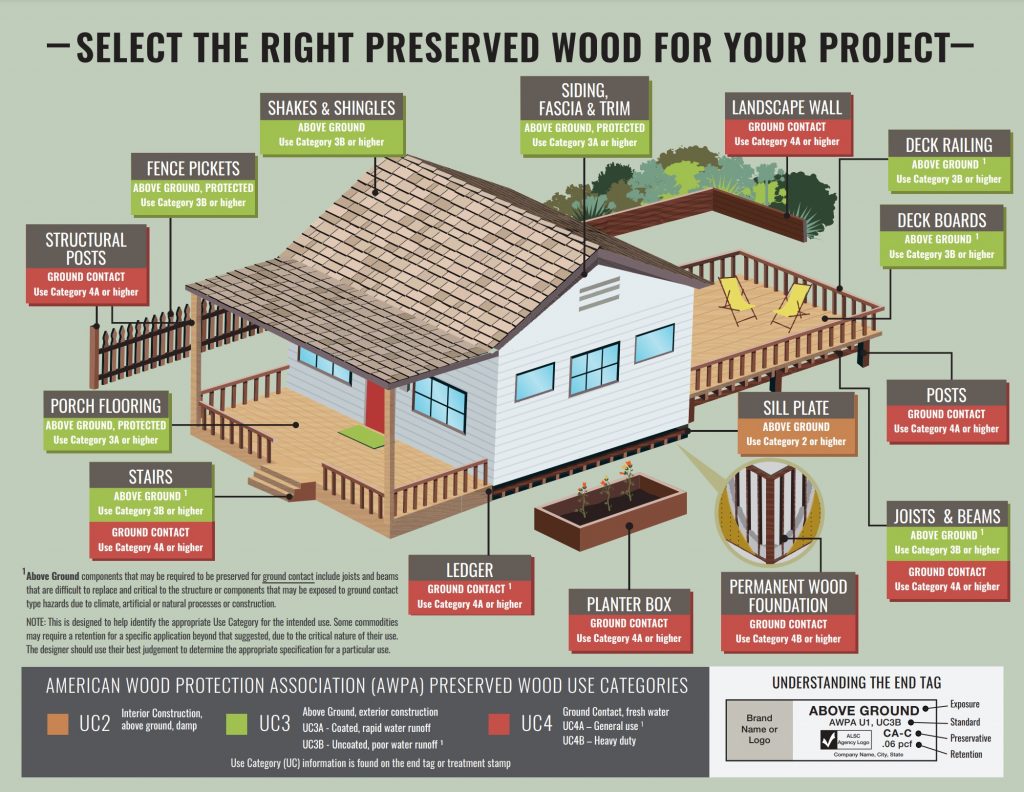
The Use Category System of the American Wood Protection Association (AWPA) designates what preservative systems and retentions have been determined to be effective in protecting wood products under specified exposure conditions. The Use Category is designated on the end tag of each piece of treated lumber.
- Fungal rot/decay and termite protection
- Outdoor, exposed applications
- Interior framing
- Marine organisms
- Dock/pier pilings
- Fire Retardant Treated Wood (FRTW)
| Use Category | Brief Description |
| UC1 | Interior Dry |
| UC2 | Interior Damp |
| UC3A | Exterior Above Ground, Coated with Rapid Water Runoff |
| UC3B | Exterior Above Ground, Uncoated or Poor Water Runoff |
| UC4A | Ground Contact, General Use |
| UC4B | Ground Contact, Heavy Duty |
| UC4C | Ground Contact, Extreme Duty |
| UC5A | Marine Use, Northern Waters (Salt or Brackish Water) |
| UC5B | Marine Use, Central Waters (Salt or Brackish Water) |
| UC5C | Marine Use, Southern Waters (Salt or Brackish Water) |
| UCFA | Interior Above Ground Fire Protection |
| UCFB | Exterior Above Ground Fire Protection |
Pressure-Treated
Pressure-treated wood has gone through a process that uses high pressure to force a solution of water and preservative agents deep into the lumber to help extend its useful lifespan.
This preservation process enables pressure-treated fence posts, for example, to withstand years of being embedded in soil.
Because pressure treated wood absorbs a significant amount of liquid during the manufacturing process, it typically arrives at stores still wet and can take up to several weeks to completely dry out. The preservatives remain in the lumber after the water evaporates.
Categories of Pressure Treatments
Waterborne treated lumber is generally used in building structures that are residential, commercial and industrial.
Creosote-treated lumber is mostly used for treating guardrail posts, railroad ties, and timbers used in marine structures.
Oil-borne treated lumber is used for treating utility poles and cross arms.
Pressure-impregnated Treatments
In pressure-treated wood, preservatives are infused into the wood, beyond just the surface.
Pressure Treatment (PT) is the general term to describe the process for infusing/impregnating the wood fibers with preservative chemicals and removing any excesses, leaving behind only enough chemical in the wood fibers (retention) to protect the wood. The AWPA sets appropriate chemical retentions depending on their intended use/requirements based on performance data derived from long-term scientific tests. The AWPA wood preserving standards are reviewed by their technical committees every five years to ensure that retention levels are appropriate and that a given preservative formulation is performing as expected.
Topical/Surface Treatments
Topical/surface treatments usually limit protection to the surface area because it is applied by brushing, spraying or dipping.
Although regularly coating a surface with a paint or sealer may help protect wood from the elements, it won’t necessarily prevent it from rotting or being attacked by insects.
Additional Treatments
While older pressure-treated wood must be periodically treated with a sealant to lock in the dangerous arsenic chemicals, newer pressure-treated must also be coated with sealant to protect the wood from weathering and corrosion. The best way to think about this issue is that pressure-treatment protects the wood from internal decay, while sealant protects the wood from external damage. Sealant also prevents the wood from drying to fast which will cause excessive warping. Pressure-treated wood can also be painted or stained, but the wood must first be allowed to dry for one to two months to enable proper adhesion.
Font: Viance treated wood
References
- https://awpa.com/info/technical/homeowners
- www.treatedwood.com/learn/what-is-treated-wood
- www.homedepot.com/c/ab/types-of-pressure-treated-wood/9ba683603be9fa5395fab9052c50759
- www.homeadvisor.com/r/benefits-of-pressure-treated-wood/